
Share Charles M Tilly's obituary with others.
Invite friends and family to read the obituary and add memories.
Stay updated
We'll notify you when service details or new memories are added.
You're now following this obituary
We'll email you when there are updates.
Select your format and elements to print

IN LOVING MEMORY OF Charles M Tilly
Charles M
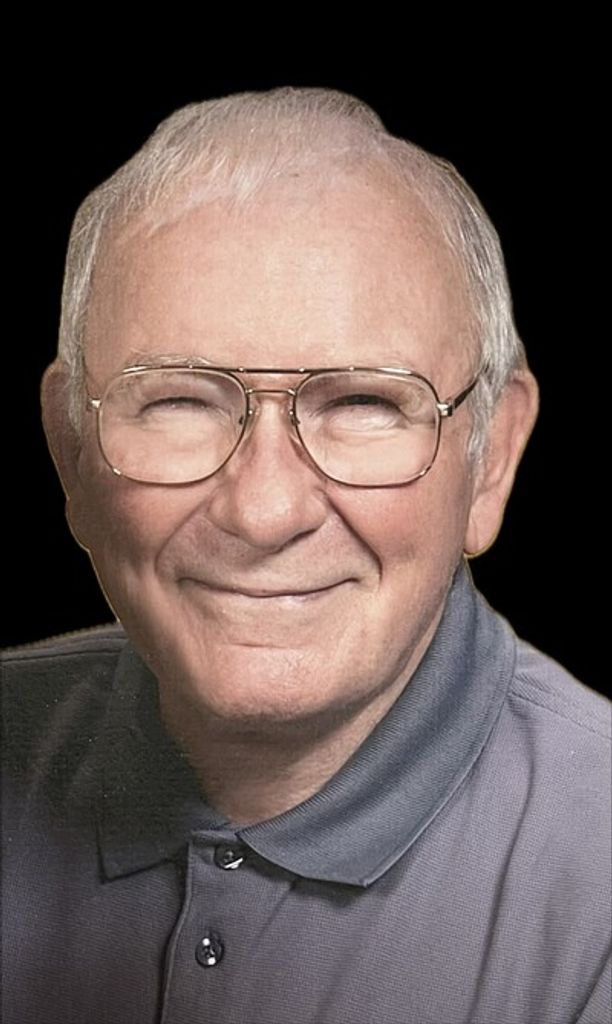
Tilly
Jan 6, 1936 — Mar 6, 2024
Germantown
Charles M Tilly's Obituary
Charles M. Tilly
1936-2024
Charles Tilly was not born in America. But he was the best of it.
He came to this country in 1956 as a penniless Hungarian refugee, forced to leave his homeland by a vengeful Soviet Union that wanted him jailed – or worse, dead. He spoke no English and knew few people. His family was in Hungary. His friends were in Hungary. His life
was in Hungary.
But in America he built a new life. He worked vigorously day in and day out, becoming a successful engineer and civil servant. He started a new family that he loved dearly; and as it grew, he welcomed each additional member with open arms. He made friends everywhere, unable to go to a restaurant or grocery store without bumping into someone he knew. He stayed true to his roots, visiting his native country frequently and uniting his American family with his Hungarian one.
And when he passed away in March 2024, at the age of 88, he died ready to meet God, after a joyful, purpose-driven life. He had been a great man in every regard.
The early days in Hungary
In 1936, Charles was born in Budapest, Hungary, to Emilia and Karoly Tili. It wasn't long before he was joined by a younger brother, Gyula, and later, he would get another brother, Laszlo. Though not wealthy, his family wasn't poor, either. His father was a policeman who worked
along with the Danube River, and they lived in government housing.
But his father was opposed to communism and the Soviet Union, and when he supported political candidates who shared his views, he paid a steep price. After World War Two, Russia placed troops in Hungary and propped up a government that would do its bidding. That government deemed Karoly, like so many others, an enemy of the people.
He was fired, his family lost their home, and they were told they'd be sent to a potato farm on the border for hard labor.
Fortunately, that never happened. But life wasn't easy. His family had suddenly become very poor. Because of his past, no one would hire Karoly; several years passed before he was finally able to get a job working in a factory. His family moved into a 350-square-foot apartment, with
the parents and three children sharing one bedroom. Charles did his homework under the kitchen table while his mother cooked. Dinners were often meager bowls of soup. For Christmas, Charles and his brothers received a pair of mittens, a hat, and a tiny bit of candy – if they received anything at all.
The Tillys still enjoyed life; Karoly tended a rose garden in the apartment courtyard. Charles and Gyula played soccer in the neighborhood. But their father's past continued to haunt them.
Because Charles came from an "undesirable background," public high schools wouldn't take him. And the government, which remained a puppet of the Soviet Union, had shut down the Catholic schools. When it reopened several to avoid seeming anti-religious, Charles enrolled in
one. Called the Budapesti Piarista Általános Gimnázium, it was an academically rigorous Catholic high school, and he earned good grades. Charles enjoyed high school. He was a charming, outgoing teenager who had plenty of friends and went to dances.
But when it came time for him to go to college, he again ran into problems. The universities – which were run by the government – refused to admit him, due to his father's record.
Without another option, Charles went to work. This wasn't new for him; because of his family's dire circumstances he had been working since childhood. But now he took it a step further, becoming the apprentice of a candy maker and earning a bakery certificate. For two years, he
worked as a candy maker and helped support his family.
Then, in the summer of 1956, he was able to finally enroll in a university, at the age of 20.
Had he wanted to, Charles could have laid low and focused on his schoolwork. But a group of students at the university were planning the Hungarian Revolution, with the goal of toppling the unjust government, erasing the heavy influence of the Soviet Union in Hungary, and expelling
Russian troops from the country. Naturally, Charles wanted to help. He joined the revolution, and though not a leader of the cause, he was devoted to it. With a gun slung over his shoulder, he went from factory to factory, recruiting workers to join the movement and take up arms.
One night, when Charles returned home to his family's apartment, a neighbor and Soviet sympathizer noticed his gun. Suspecting he was playing a role in the revolution, he reported him to the authorities, and Charles was put on the wanted list of the "secret police" – an extensional arm of the Soviet Union meant to round up revolutionaries.
Had the revolution been successful, perhaps this wouldn't have mattered. But in standing against the Soviet Union, the Hungarian college students and workers faced unimaginable odds. Though the Russian troops initially withdrew, a furious Soviet Union returned with more soldiers and tanks and crushed the rebellion with merciless force. 2,500 Hungarians were killed and another 20,000 were wounded.
With the short-lived revolution over and his name on a wanted list, Charles knew he wasn't safe, and in the fall of 1956, he made an agonizing decision: he would escape the country. In the middle of the night, he left his home, without saying goodbye to his family. It would be better, he
thought, if they didn't know his whereabouts.
Years later, Charles talked about how hard this was: to leave his parents and brothers quietly, without knowing if he would ever see them again. But his timing couldn't have been better. The next day, the secret police showed up at the apartment asking for him.
Charles spoke Russian, and remarkably, he was able to convince a truckful of Russian troops to give him a ride. He was driven to his grandmother's village, and he stayed with her before saying goodbye and continuing his journey.
The goal was to get to neighboring Austria, where he could enter a refugee camp then gain passage to another country. After leaving his grandmother's village, Charles joined a group of others trying to escape, and together, they made it to the border. They heard voices, but from a
distance, couldn't tell if they were speaking German or Russian. If the language was German, it would mean the people were Austrian, and that the border was safe to cross. Russian, on the other hand, would mean they were perilously close to being caught.
Charles volunteered to sneak across the border to find out. Crawling through the mud, he got close enough to figure out the language. It was German – they had made it.
Charles entered a refugee camp, with the plan to immigrate to Switzerland and become a candy maker. He still had his bakery certificate, and he intended to use it. But just before his bus to Switzerland left, Charles grew seriously ill, and had to go to the hospital. By the time he was better, all the buses to Switzerland had left, and moving there was no longer an option. Charles had to make a different choice. And he decided to go to America.
Charles comes to America
Originally, Charles had intended to enroll at Dartmouth College, where he had been admitted. A Hungarian math professor at the institution was an alma mater of his high school and was eager for Charles to join him.
But Charles and another Hungarian refugee, John Adler, received a more generous offer from The University of Mississippi, which was willing to pay for all four years of their college tuition. Jumping at the opportunity, Charles and John enrolled at the university.
After spending a month in an English-learning program at Bard College – where they didn't learn much English – Charles and John headed south by train. The plan was to arrive in Memphis, where they would meet Ole Miss officials who would take them to Oxford. But when the two stepped off the train in Memphis on Feb. 19, 1957, they were greeted by more than just school officials – they were greeted by photographers and reporters.
Because Charles and John had barely eaten in the last 24 hours, the Ole Miss staffers took them to Memphis' finest steak restaurant. When a large steak was placed in front of Charles, he assumed it was for the whole table and began to divvy it up. A piece of meat that size would have served as a meal for his entire family in Budapest. But the steak, officials tried to explain, was just for him.
At Ole Miss, Charles and John were celebrities. They had been written about in the newspaper and introduced to the entire student population during a campus-wide meeting. Everyone knew about the two Hungarian refugees, and they had no shortage of female suitors.
One day, a group of Ole Miss women were discussing Charles' personal life. They didn't know him personally, but they had heard that he was being set up on a blind date with a student that they thought would be a terrible fit for him. It would be better, they said, if one of them went on
a date with Charles instead. So, one of them, a history major from Olive Branch, volunteered.
Her name was Bette. And she would become his wife and best friend.
Charles and Bette dated for most of college. Charles studied engineering, Bette history. To earn money, he sorted newspapers and worked as a sketch artist for an archeological professor, providing him with what ancient remains could have looked like. He spent a summer on an
archeological expedition in Mexico, and other summers, he worked for Michael Baker Engineering in Jackson.
In 1960, Charles and Bette graduated, and got married at St. Peter Catholic Church in Memphis. They moved to Pennsylvania – where Charles had accepted an engineering position – then Washington D.C. While Bette worked in the National Archives, Charles worked as a civil engineer, designing overstate passes for the interstate system. In D.C., Charles learned an innovative way to do his engineering work when a friend in the Weather Bureau introduced him to computers. After office hours, Charles would take his work to the Weather Bureau and let the machine correct for him....one of the first in his office to move from slide rule to computer!
In 1964, Karoly visited, marking the first time Charles had seen his father since he had left Hungary in 1956. Not long after this, Charles took a position with General Electric in Huntsville, where he worked for NASA on the design of the Saturn V rocket – which would help propel man
to the moon.
While still in Huntsville, Charles and Bette gave birth to their first child, Christina, in 1965. And a year later, the family visited Hungary. It was the first time Charles had seen his mother and brothers in a decade.
As Charles continued to excel in his career, the Tilis moved to New Orleans, then Philadelphia, and finally, Memphis. It was only 30 minutes away from Olive Branch, and Charles and Bette wanted to be closer to her family. Not longer after this, the Tillys adopted a second daughter, a
baby they named Maria.
Charles took a civilian position with the Navy in nearby Millington, where he spent the rest of his career and made a significant impact. He built the Navy Training Command's automated data processing program, and served as director of management information and instructional systems. He became head of the Navy Comptroller Standard Systems, and led the effort to streamline accounting and civilian payroll systems with computers, which were increasingly being used.
By the time he retired in the early 1990s, Charles was the highest ranking, highest paid civilian employee at the Millington Naval base, and leading a large operation.
Charles' Soul
But it was not Charles' career accomplishments that made him a great man, nor was it his willingness to stand up to Soviet tyranny.
It was his heart.
More than anything else, Charles loved his family. He loved Bette. He loved his daughters, Christina and Maria. When they got married, he loved their husbands, Bob Klyce and Darren Meyers.
As time passed and his daughters had children, he became a loving and devoted grandfather, always willing – and eager – to babysit his grandchildren: Michael Klyce, John Klyce, Sam Klyce, Mack Meyers, and Eva Claire Meyers.
He visited Hungary as often as he could, and always welcomed his foreign family members to the U.S. He paid for two of his Hungarian nephews, Bali and Laci, to go to school in the Memphis area, and provided their housing. He did the same for his goddaughter, Erszi.
Whenever Charles met a Hungarian who had immigrated to Memphis, he didn't hesitate to befriend them and ensure they were comfortable.
Friendships, of course, were common for Charles. You couldn't go somewhere with the man without him bumping into someone he knew and striking up a 30-minute conversation. He was outgoing, kind, and charming. He was funny, with a sharp sense of humor. Once, his grandson
John strutted into the kitchen, wearing a tight, sleeveless shirt.
"Papa," he said, "You like my muscle shirt?"
"Yeah," Charles replied. "Now you just need some muscles to go with it."
Even when he wasn't spending time with family and friends, Charles kept busy.
In retirement, he and Bette traveled the world. Both were active members of Friendship Force International, and Charles served as its president and tour director. A devout Catholic, he became president of the Fleur de Lis group at St. Louis Church. And to help tired parents with sick kids,
he organized food drives to collect snacks and meals for mothers and fathers with patients at Le Bonheur Children's Hospital.
Life wasn't always easy. In the last two decades of his life, Charles underwent numerous surgeries to fix health problems. In 2016, when his daughter Maria passed away after a long fight with breast cancer, he was devastated.
But Charles continued to find joy and hope. When Darren, Maria's husband, married Lana Zepponi Meyers in 2018, Charles excitedly welcomed her as a member of the family. And when she gave birth to Jacob Paschal Meyers in 2021, he was thrilled. He had a sixth grandchild, and
he happily watched him grow from a baby to a toddler in the last few years of his life.
On the morning of Mar. 6, 2024, Charles passed away at Methodist Le Bonheur Germantown Hospital, with Bette and Christina by his side. He had been admitted to the hospital numerous times in his final years for various illnesses, and had always made it out. This time he didn't.
But perhaps he didn't want to.
In recent years, Charles spoke of his death often, and the day he would see Maria again. We take great comfort knowing that joyous reunification has occurred, and that he has been brought back together with not just her, but his late brother, Gyula, and his parents, Emilia and Karoly.
There are those of us he leaves behind: his beloved wife Bette Baird Tilly, his daughter Christina Klyce and her husband Bob, his brother Laszlo Tili and his wife Gabi, his sister-in-law Sally Baird Logan, his son-in-law Darren Meyers and his wife Lana, his grandchildren, Michael
Klyce, John Klyce, Sam Klyce, Mack Meyers, Eva Claire Meyers, and Paschal Meyers; and his nephews, nieces, and many other family members. Not to mention countless friends.
But while we mourn this loss, we keep Charles close to our hearts. The archbishop Peter Sartain once said that to say goodbye to a loved one is to entrust them to God's care. If you break down the Spanish word for goodbye, "Adios," you find that it literally means, "to God."
So, we say goodbye to Charles, entrusting him to the care of the Lord, until our own time comes, and we see him again.
The funeral Mass for Charles will be on Thursday, March 21, 1:30 PM at St. Louis Catholic Church, with a reception following. Interment will be in the columbarium at St. Peter Catholic Church.
In lieu of flowers, please consider a donation to the Mid-South Food Bank (Attn: Development Department, 3865 S. Perkins Road, Memphis, TN 38118) or The Village at Germantown Foundation (7820 Walking Horse Circle, Germantown TN 38138)
Charles M Tilly's Guestbook
Visits: 0
This site is protected by reCAPTCHA and the
Google Privacy Policy and Terms of Service apply.
Service map data © OpenStreetMap contributors